
Self-Drive vs Private Driver in Norway
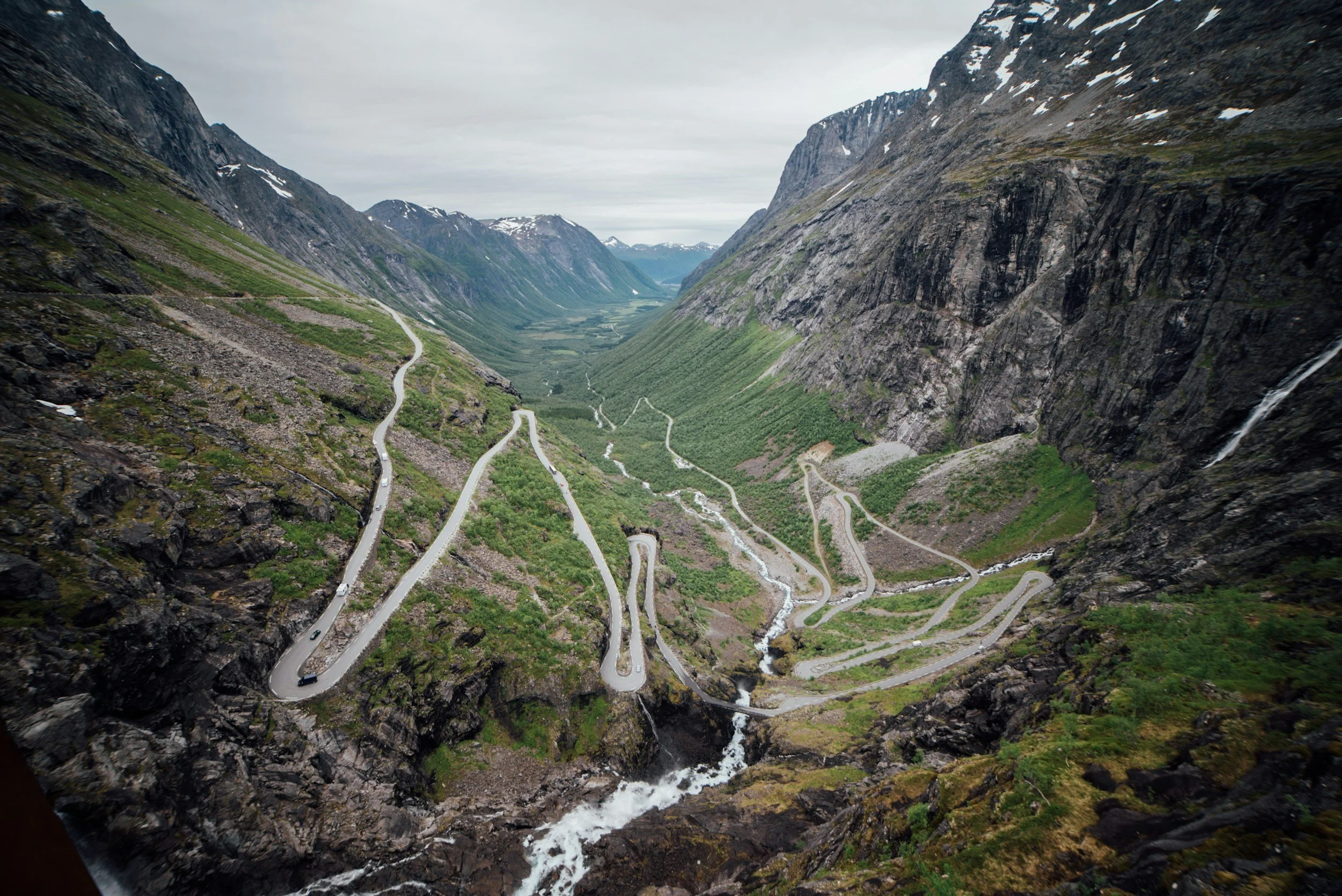
Self-drive is often the default assumption for a Norway itinerary. The scenery photographs beautifully from behind a windshield, and the country's 18 National Tourist Routes are genuinely built for the experience. But self-drive is not automatically the right choice for every client, and the decision deserves more thought than it usually gets.
Start with the roads themselves. Norway drives on the right, and dipped headlights are required at all times by law, day or night. Beyond that basic rule, the terrain does the real work of separating clients who will enjoy driving from clients who will simply endure it. Mountain passes are narrow, and hairpin sections on routes like Trollstigen or Sognefjellet ask for a driver who is calm on switchbacks with a drop on one side. Many of these high passes close for winter entirely. Trollstigen typically runs from mid-May to October, and Sognefjellet is normally closed from around December to early May, though exact dates shift each year with conditions and are set by Statens vegvesen, Norway's road authority, not by a fixed calendar. Anyone planning a self-drive itinerary outside the summer window needs to check current status before building the route, not after.
Ferries are the other variable advisors sometimes underestimate. Norway's road network includes thousands of ferry crossings, and most of them, especially the short fjord crossings on main routes, run on a simple turn-up-and-go basis with automatic number plate billing. No booking, no drama. A smaller number of scenic or high-demand crossings, such as Geiranger to Hellesylt in peak season, are worth booking ahead. The practical takeaway for an itinerary is that ferries add real time to a driving day, and that time needs to be built into the schedule rather than treated as a minor detail.
None of this makes self-drive a poor choice. For clients who enjoy the process, who are comfortable with narrow roads and unfamiliar signage, and who want the freedom to stop wherever the view demands it, self-drive in summer can be one of the best ways to experience Norway. It suits confident drivers, couples splitting the driving, and clients who see the road itself as part of the trip.
A private driver is the better fit in several situations. Older clients or those uncomfortable with mountain roads benefit enormously from handing over the wheel. So do clients traveling in winter, when road conditions demand local judgment that a rental car GPS cannot provide. A private driver also allows guests to enjoy a proper lunch with wine, to look up from the road at a waterfall instead of glancing at it in a mirror, and to receive real commentary on the landscape instead of driving through it in silence. For shorter, denser itineraries where every hour matters, a driver who already knows the ferry timings and the quiet viewpoints can save a full day of guesswork.
The right answer depends on the client, the season, and the route, not on habit. Matching the two well is one of the clearest ways an advisor's local knowledge shows up in the finished trip.